
I did not begin motherhood with a glowing image of peaceful nursing. Or as a mother who already starts lactating in her 3rd trimester.
I began it with a 450-gram box of formula handed to us in the hospital.
“Offer this,” the doctors said.
So we did. As beeastmilk wasn’t there, so formula was the only option.
The First Few Days
After delivery, my body collapsed before it could celebrate. Like every mother.
I fainted. My vision blurred. I was put on blood infusion. That day sitting up felt like climbing a mountain.
I was sooo new to it that breastfeeding trials and positioning techniques meant nothing. I was just silently watching my newborn sleeping beside my bed.
So, my husband handled everything.
He measured powder. Fed our newborn throughout the day and night while I lay weak and stitched, bleeding.
The pediatrician kept advising us, “Breastfeed before formula.”
We tried.
He didn’t latch.
We tried again the next day.
No latch.
Day three came. Still formula.
And quietly, a fear began forming:
What if my milk never comes?
A Stranger’s Help
Before discharge, an older hospital attendant came to me and offered to help. Obviously she had years of experience so I said yes.
She positioned the baby, adjusted my hold, and for a moment it seemed possible. And she also suggested me to take “Lactoferrin” tablets for 2 days for milk.
I still thank her for that suggestion.
So, we went home carrying both a newborn and uncertainty.
Confidence Was Tested
At home, recovery became real.
Sutures were hurting. Bleeding continued. I was advised not to sit in certain positions which made it even harder to try breastfeeding.
Feeding comfortably was not simple.
For several days, formula carried us.
We attempted breastfeeding once or twice daily. No real milk. No consistent latch.
Nights started turning chaotic.
The kind of chaos that makes you forget what silence sounds like.
My husband walked the floors for hours. Prepared bottles. Cleaned. Managed everything while I tried to heal.
Our peaceful life had shifted overnight.
The Decision to Try Properly
By the end of the first week, stress had reached its peak.
We had never planned long-term formula feeding. But we also hadn’t fully committed to reversing it.
One evening, we decided to stop drifting and start trying intentionally.
We read articles. Watched videos. Compared experiences.
I began offering the breast more often during the day, still relying on formula at night.
And then — the first sign.
A few drops of milk appeared.
Not enough to satisfy a baby. But enough to ignite hope.
The latch still wasn’t working.
Then we noticed something small but powerful.
Baby loved the sweetness of his calcium syrup.
So we did something creative.
We poured on a few drops on the nipple before offering the breast.
And guess what? He latched.
Not perfectly. Not for long. But he latched.
We repeated it. Carefully and responsibly. Maintaining his prescribed dose of calcium.
We tried only tiny drops to encourage him to associate comfort with the breast.
At the same time, I began expressing milk into a bowl. Drop by drop.
Day one: barely visible drops.
Day two: noticeable.
Day three: enough to make me smile for the first time since delivery.
Finally, Milk had arrived.
The 24-Hour Experiment That Humbled Us
So, we reduced formula drastically and attempted a full day of breastfeeding.
Twenty-four hours passed.
No urine. No stool.
At first, we felt victorious.
Then we felt alarmed.
Milk was increasing — but not enough yet.
And we gave formula again to make him pee. And he peed almost instantly.
That moment grounded us.
Breastfeeding is built step by step, not forced by pride.
So we started to track of urine and potty output daily.

The Night Everything Almost Broke
Just as milk improved and latching stabilized, a new battle began.
Pain.
Severe nipple pain.
The right side cracked from imperfect latch. Every feed felt like fire.
One night, the pain became unbearable.
The baby cried. My body ached. Sleep was absent.
And for the first time, I questioned my decision to have a baby.
I said it aloud.
My husband went silent.
Then softly, he said, “Check the cart.”
He had added formula to our online basket.
Not out of defeat but out of protection.
I felt a strange mix of relief and sadness.
Because I was thinking the same thing.
That night, instead of acting emotionally, we researched.
We compared breastfeeding and formula long-term.
We calculated how many tins would be needed in a year.
We checked brands, bottles, sterilization methods, costs.
We considered pumping — then learned it could worsen nipple trauma.
We studied every path carefully.
And then we slept without concluding anything.
No impulsive decisions.
The Morning After
The next morning, I fed him from the uninjured side and rested the cracked one. I applied breast milk to the sore nipple. And gave warm compress.
We reduced emotional pressure and within 48 hours, healing began.
And something shifted inside me.
We weren’t trapped. We were choosing.
The stress of that night slowly dissolved because we had approached it with clarity, not panic.
There was no grand announcement when formula stopped.
Just a day when we realized we hadn’t needed it.
And then another day. And another.
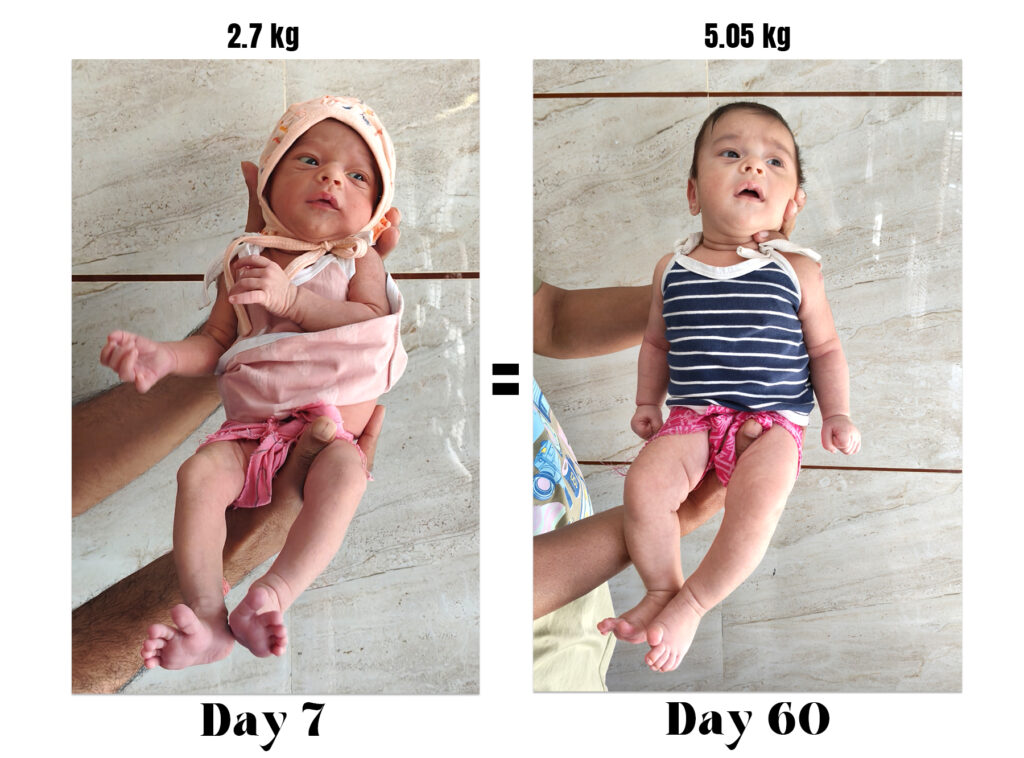
Today, at two months, breastfeeding feels natural.
Comfortable.
Ours.
Touchwood.
What This Journey Taught Me
Milk sometimes arrives slowly.
Latch sometimes needs creativity.
Pain sometimes tests conviction.
And decisions made in exhaustion are rarely permanent truths.
If we hadn’t stimulated the breast consistently…
If we hadn’t cautiously reduced formula…
If we hadn’t found a gentle way to encourage latch…
If we had decided in anger that night…
Our story would be different.
But we paused.
We researched.
We endured.
And slowly, breastfeeding became not just nutrition — but resilience.
This was not a perfect journey.
It was built.